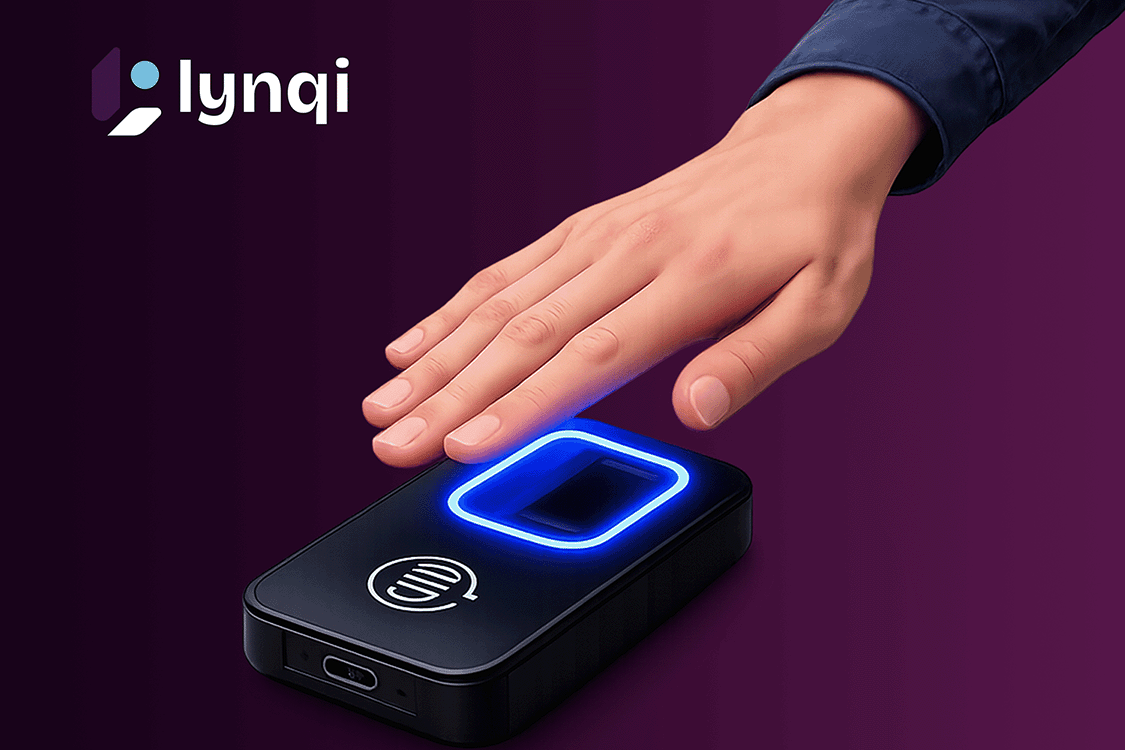
ByteFission Prepares Launch of Lynqi Biometric Payment Platform
ByteFission LLC is preparing to launch Lynqi, its flagship biometric identity and payment platform created to enable secure, device-free access to supported financial services. The platform is built around a simple but consequential shift: moving authentication away from cards, phones, passwords, and other physical credentials, and anchoring access instead to verified human presence. Lynqi enters the market at a time when the limitations of conventional access tools remain deeply visible. Cards can be misplaced, phones can fail, passwords can be forgotten, and too many essential interactions still depend on objects that introduce delay, friction, and unnecessary vulnerability. Lynqi is designed to respond to that weakness with a more direct model of interaction, one in which the individual becomes the basis for supported access.
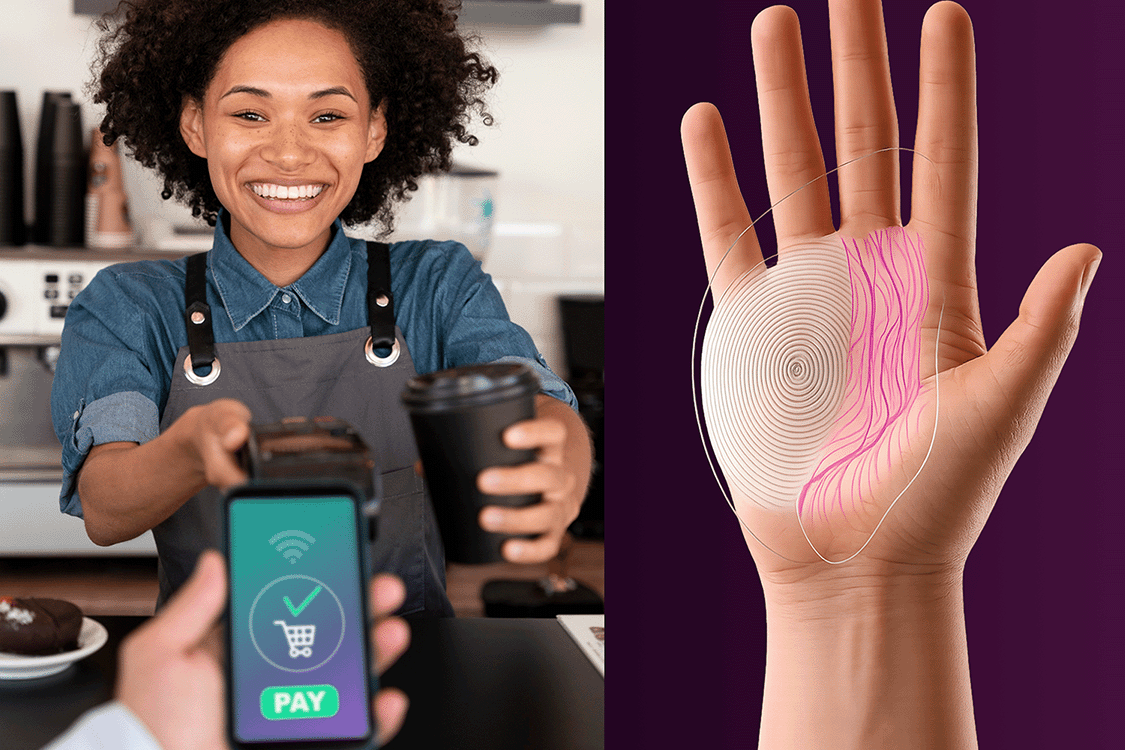
At the center of the platform is contactless near-infrared palm-vein recognition. Lynqi uses sub-dermal vascular pattern authentication rather than surface-based identifiers, allowing the platform to verify identity through internal biological characteristics that are difficult to replicate. The system architecture is designed around encrypted biometric templates, local feature extraction, and secure matching protocols that do not retain reconstructable palm images.
The company's initial focus is payments. Lynqi is being positioned to support palm-based retail purchases, biometric ATM withdrawals, wallet and bank account authentication, and device-free transactions within controlled commercial environments. Over time, the platform's relevance extends beyond payments into transportation hubs, enterprise access control, healthcare and institutional authentication, and other service environments where trusted identity verification matters.
Lynqi is not being introduced as a replacement for existing financial institutions. Instead, it operates as an authentication and routing layer on top of regulated financial systems, linking verified identity to existing bank accounts, wallets, and supported settlement pathways. This positioning allows the platform to function as identity infrastructure while remaining compatible with broader financial ecosystems.
ByteFission's launch strategy begins in Ghana, with Accra serving as the initial pilot environment. From there, Lynqi is being advanced with a broader international perspective, reflecting the growing importance of secure identity-linked access across both domestic financial systems and cross-border environments. The company's longer-term direction positions Lynqi not simply as a payment experience, but as a wider identity layer capable of supporting financial and digital services across markets.
That broader significance is central to ByteFission's view of the platform. Lynqi is being built around three durable pillars: identity portability, hardware-anchored authentication, and high-frequency transactional utility. In practical terms, that means a platform designed not only for secure authentication, but for repeated, everyday usefulness in the environments where speed, trust, and continuity matter most.
The company is also opening Lynqi to pre-seed investment as it moves toward pilot deployment. The current raise is intended to support core system completion, regulatory and operational readiness, pilot hardware deployment in Accra, and the onboarding of active users and merchant locations needed to validate early traction. The objective is clear: to transition Lynqi from a high-conviction platform into a live biometric identity network with measurable usage, transaction activity, and merchant engagement.
For ByteFission, Lynqi represents more than a fintech launch. It reflects a larger belief that the future of access will increasingly depend on systems that are less fragile, less dependent on hardware, and more closely linked to the individual themselves. In that future, identity does not need to be carried as an object. It can function as infrastructure.
Category
News
18/05/2025
News & Events